Showing posts with label asian media images. Show all posts

Wednesday, February 11, 2015

Fresh Off The Boat vs. Gilmore Girls: Asian American Families


With the long-awaited premiere of Fresh Off The Boat this past week, a lot has been written about the first Asian American family to be on primetime TV since 1994, when Margaret Cho's All-American Girl infamously debuted. But I was way too young, thankfully, to know or care about All-American Girl when it first came out.

Instead, later on, I had another TV Asian American family to try to relate to: Lane Kim and her mother on Gilmore Girls. And as much as I love that show, I have to say how much I've always cringed at how the Kims were portrayed. Mother Kim, pressed to stand as the lone symbol of Asianness, alternates between antagonist and butt of joke. Consequently, Lane's character arc seems to be her quest to ward off everything that is represented as Korean in the show. And when Lane has to travel to Korea, it is treated as an unfathomable horror. Instead, what she wants to do is rock out to Dead Kennedys and touch the heads of blond-haired boys. In other words, she wants to be "American," forever divergent from "Asian," and never the twain shall meet.

Oh the joys of being Asian American. Also, where is Mr. Kim?
Not to say that these feelings are inaccurate, as it is practically a rite of passage for young Asian Americans to, at some point in our lives, feel angry at the fact that our parents need us to translate everything, or that we can't eat certain foods around our "American" friends, or that we have to go to <insert ethnicity> school and <insert ethnicity> church on the weekends. Some of us eventually learn how to reconcile our identities and some of us don't. In Gilmore Girls, there's actually a very rich and complex subplot in the later half of the first season where Lane unexpectedly falls for Henry, a Korean American classmate of Rory's. She dismisses him on-sight at first just because he too is Korean (a classic Asian American move), but to her utmost horror, she finds that she likes him despite the fact that he's what her mother would like. This says a lot about the conflicting identity issues within Lane and makes her a much more layered character.

The only problem is that this storyline is never pursued much further and just peters out, never to be examined again. Soon, it's back to the same old one-sided angle where Asian culture is this constant impediment to becoming American, where rock music and the Lorelai/Rory tag-team are both a figurative and literal refuge from having to be Asian. And it's not as though identity clash is a worthless topic that should not be explored. Gene Luen Yang's American Born Chinese deals with this exact same issue as well. But at the end of that story, there is a reconciliation where the protagonist finally feels comfortable enough with himself to befriend the Other Asian Kid in school whom he had previously avoided. In contrast, with Gilmore Girls, I don't know if such a comparable event happens. Culminating with her wedding (replete with her oh-so-kooky relatives from Korea), Lane seems to succeed more via escape than through reconciliation.


A painful scene from "American Born Chinese" by Gene Luen Yang


Maybe one will reflexively argue that a show like Gilmore Girls shouldn't bear these burdens: "Lorelai's parents were controlling and Taylor Doose was a nutcase too, so why can't Mrs. Kim be the same?" Sure, except the likes of Mr. and Mrs. Gilmore or Taylor haven't been absent from TV for 2 decades.


In stark contrast to Gilmore Girls, the family in Fresh Off The Boat is tight-knit and loving, despite their peculiarities. At the end of the pilot, the Huangs have expressed the utmost solidarity for each other and they proudly walk off together with the vow that they'll always look out for one another. In his book and in his public talks, Eddie Huang heavily emphasizes that singular moment when he first brought his traditional Chinese lunch to school and the embarrassment he suffered. But instead of adapting himself to become more "American"—like, for example, learning to make a better hamburger or creating some East-West fusion cuisine—he learns to unapologetically embrace his "stinky" lunch. And now, well, the joke's on his bullies because everybody loves that food now.

One may argue that Eddie's love of hip-hop is the same thing as Lane's love of rock. But the key difference is that hip-hop is never presented as the antithesis to Eddie's Asian Americanness. In fact, his parents even sometimes gamely try to adopt some of his lingo. More importantly, the whole reason Eddie becomes enamored with hip-hop is that it's his only means of articulating what it's like to be Asian American, which is to say, to be non-White. In contrast, Lane's passion for rock is pitted against her Asian American identity as an incompatible force, as her way of expressing how she's not like all those other Asians who exist in her world. Whereas Eddie's exuberance for hip-hop is his way of asserting his unique racial identity, Lane's affinity for rock just ends up neatly fitting her in the pre-existing mold of Lorelai.

The Huangs are going to do it their way


Eddie Huang has railed against how ABC has bowdlerized his life story. And yes, I too would like to see the HBO version with the Psycho Gangster Dad from real life. But this family-friendly version of his life story also presents something that I've never seen in American pop culture before: a warm and loving Asian American family. No abusive parents, no maudlin story of having to sell body parts to escape from Asia, no loveless marriage because Asians can't be romantic... This is all the more galling when you consider the fact that Asian Americans are stereotypically thought of as the Model Minority with strong "family values." I guess not in TV-land. It wasn't until Lost that we saw that rare depiction of an Asian couple in a complex relationship. Fresh Off The Boat goes one step further by giving such a couple a family of their own. This is a huge step forward.

And in the end, it is those seemingly incongruous aspects—the Defiantly Asian element wrapped up in a Wholesome Asian family—that are so refreshingly powerful and resonant in Fresh Off The Boat. No longer is your Asian American family something you have to overcome or escape from. Instead, they're the ones who'll have your back as you teach all the fools to appreciate your "stinky" lunch.


Monday, September 29, 2014

The Maze Runner: Continuing the Successful Trend of Diversity in Entertainment?


A weekend ago, The Maze Runner managed to avoid the non-Hunger Games YA movie franchise curse of sucking. It was released to decent reviews and opened at #1 in the box office not only in the U.S. but also in over 50 other countries. Unlike, say, His Dark Materials, this series won't be a stillborn franchise as it has been given the green light to expand into further sequels. All in all, not bad for a movie without a recognizable star and whose source material wasn't a household name.

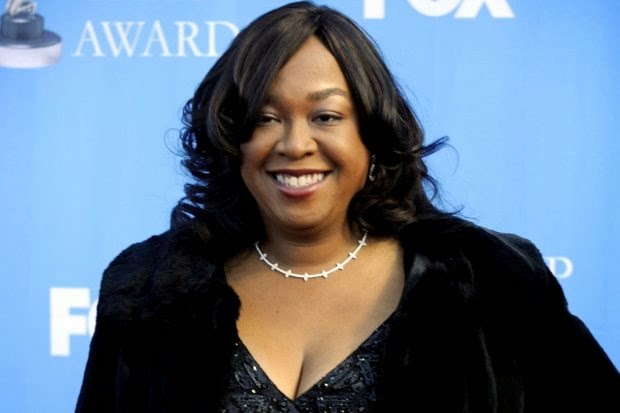
Also this past Thursday, Shonda Rhimes' new TV show, How To Get Away With Murder, drew in 14 million viewers for its series premiere. A couple of weeks ago, the Idris Elba movie No Good Deed opened atop the box office despite some terrible reviews. And this weekend, the Denzel Washington vehicle The Equalizer has won the box office.

What do all these very successful movies and TV shows have in common? A very diverse cast. 

Shonda Rhimes is my hero, especially for representing Philly in "How To Get Away With Murder"


There were severable reasons that I wanted to see The Maze Runner. First, the concept of a killer mystery maze was damn cool, and as one of my primal fears is death by crushing, many of the action sequences in the trailer inherently gripped me. Seriously, death by crushing: worst death ever. 

Second, Kaya Scodelario was in it. Effy! I watched the entire first season of Skins just for you! And you only showed up in the beginning and at the end! And you barely spoke! 

Effy!

Cool action sequences. Pretty girl. All standard and understandable reasons to go see a movie, right?

But I also went to see The Maze Runner for a guy: the character of Minho, to be more specific. Having never read the books, I didn't know that he even existed. So when I first saw the trailer, I was shocked to see an Asian male character featured prominently in the cast. Upon further research, I found out that he was actually an important character who got to do really cool things. 

There doesn't seem to be any data out right now that verifies that one of the key reasons that this movie succeeded was that a lot of movie goers felt as I did, but if we look at the bigger picture of recent trends (e.g. Kevin Hart is just raking it in!) as well as academic studies that show that diversity is good business, it seems to be a no-brainer that having solid non-White characters in a good movie will only help its prospects. 

Rufio! Rufio! Roooo! Feeeeee! Ohhhhhhhh!
And yeah, The Maze Runner is an entertaining movie that effectively mashes up Lord of the Flies, Peter Pan, and Lost. The audience is just thrown into the confusing and nightmarish world of the maze, which helps us identify with the bewildered protagonist, Thomas (played by Dylan O'Brien). You keep watching the movie because you want to know who built this monstrosity and for what reason. 

Ki Hong Lee as Minho
Minho turns out to be an awesome character as well (as verified by the two female friends with whom I went to see the movie). The other characters are engaging and complex enough, including the leader Alby and his right-hand man, Newt (aka the little lovesick boy from Love Actually who still looks exactly the same except he's twice as tall now). Even the resident bully, Gally, makes a lot of sense if you really think about what he says.

The moral argument for diversity was always the easy argument to make. From an artistic angle, a creative work still has some obligation to be rooted in reality. That's why we rightly snort in derision at Mary Sue stories in which a thinly-veiled author avatar smites all his enemies with ease, always has the pithy one-liner comeback in every single situation, and has conventionally beautiful girls fall in love with him for no discernible reason. So if your story takes place in multicultural location like Los Angeles or New York City, or in a non-Western setting like Ancient China, it's probably best not to always shoehorn in a White male hero into the middle of the story. There's also the socio-political angle that recognizes that having one's story told is a right and that by denying some groups the opportunity to share their narratives, we are effectively treating them as second-class citizens.

Middle Easterners are such a diverse people. This is what Persians look like when they're heroes.


And this is what Persians look like when they're villains.
More often than not, however, the defenders of the status quo use the economic argument to stifle debate. The rather bizarre and offensive rationale is that Americans (mainly White Americans) just aren't willing to identify and empathize with any character outside of their own racial group. Even though native Beijingers could cry at the hardships of a turn-of-the-century Philadelphian debutante in Titanic and Ghanians could root for a British schoolwizard in the Harry Potter movies, Americans just don't want to see Black or Asian or Latino characters. This is an attitude that I've harshly criticized before.

Well, what if that argument no longer stands? What if it's not just morally beneficial to be inclusive in storytelling, but also economically as well? Will we finally see more changes? I definitely think so, and I think these changes are happening now. But I would also be interested in hearing what the new excuses against diversity will be and whether they will have any influence.

Some may ask: What does it matter? Some may even accuse people like me of being the racist ones for being so concerned about race. Shouldn't we all just be "color-blind" and appreciate a character for her character, and a story for its story?

That sounds all well and good, until you realize that we still live in a world where someone like Mae Jemison never believed that she could be an astronaut until she saw Uhuru in Star Trek. Or where a young Barack Obama, as someone who didn't exactly look like George Washington, never realized the potential for a prominent career in public service until he saw Sen. Daniel Inouye in the Watergate hearings.

Representation matters. And in a society where people are still superficially classified and pre-judged by their race and gender, it really matters.


Monday, January 20, 2014

Book Review: "Native Speaker" by Lee Chang Rae

This past summer (which seems eons ago), I read Lee Chang Rae's award-winning debut novel, Native Speaker. I have little confidence in my abilities as any kind of literary critic, so I'll just offer up some impressions and thoughts I have after finishing the book.

The protagonist of the novel is Henry Park, who is a 2nd generation Korean-American who grew up in New York. Like many young Asian Americans who grew up in an immigrant family, he has had difficult relationships with his parents and his heritage. He's married to a White American woman and superficially appears to have integrated himself well into society, but underneath it all, he is still estranged from his own homeland, whether that be America or Korea.

The best parts of the novel, in my opinion, are when Henry recalls his childhood memories with his parents, especially his father. As a 2nd gen kid myself, I could easily relate to a lot of frustrations that Henry had with his parents. One great example is how he wished that his parents could have talked to him freely and openly as he perceived his White friends' parents did with their children. Of course, his wife then tells him that that's not all that great either.

Unfortunately, I think the book suffers in the second half because it switches gears in an attempt to go into "espionage thriller mode". Henry works as sort of a shady corporate spy who ingratiates himself with certain targets in order to extract compromising information from them for his firm's clients. From what I understand, Lee Chang Rae was using this as a metaphor for the invisibility that Henry feels as an Asian American man. The issue of invisibilty is a great one to base a novel on, but the way it was executed in the story felt like a distraction to me. Maybe I'm a little biased because I greatly prefer "ordinary" stories whose dramatic tension lay in the all-too-realistic scenarios and possibilities, as opposed to extremely unusual premises. But I would've preferred if the novel did away with the high-concept spy stuff and made Henry even more of an everyman.

I'm also wary of Asian American writers that are held up to sell "cultural experiences" to a mostly non-Asian audience, especially if those writers aren't all that familiar with their ancestral culture to begin with. Despite his unAnglicized name (which may give the impression that he's a recent immigrant), Lee Chang Rae has actually lived in America since he was 3 years old. He was educated at Exeter and Yale, and his wife is neither Korean nor Asian. Not that this should take away anything from him because Asian American is as Asian American does, and there's no single Asian American Experience.

But American society's tendency is to pigeonhole prominent minorities as spokespeople for their demographics. The character of Henry Park grew up in an immigrant working class environment where he and his family faced blatant and open racism. But a lot of Asian Americans grow up in middle class environments because their immigrant parents are doctors, lawyers, or professors; and they face their own struggles with identity and racism, even if people have never screamed, "Chink!" at them. Some Asian Americans aren't immigrants at all and have been in America for many generations, even speaking only English at home. What I'm trying to say is that Lee Chang Rae can only represent just a segment of the diverse Asian American population, and that there should always be room for more than just one spokesperson.

Overall though, I still enjoyed the book, if only because there's such a lack of Asian American literature out there, especially ones that have attracted mainstream recognition and acclaim as this one. I'm looking forward to reading his later works to see how he's changed and developed as a writer.


Wednesday, November 27, 2013

Young James Shigeta: Holy moly, how is something in black and white LESS racist than what we see today?


I thought that this post would be relevant right now because of the Katy Perry AMA incident. I don't think she is a racist for wearing a cheongsimono (or whatever her outfit was supposed to be) in her performance. But I do think our society's racist for thinking that the only time it's acceptable for non-Western culture to take center stage is when White people are wearing it as a costume. It's like when you show up to a dinner party, but only your bottle of wine is welcomed. Oh thank you for your culture! Please leave it on the doorstep and go away because we can't stand your ethnic faces.

But astoundingly, the problem seems to have gotten WORSE over time. The video below shows various clips of a young James Shigeta in his days of wine and roses, and it's confusing as hell. He's an Asian actor. In a Hollywood production. And he's acting all normal and suave and shit. This isn't supposed to happen!


I mostly recognize James Shigeta in his various Old Asian Man roles in the past few decades. Most notably, I remember him getting shot in the face by Alan Rickman in Die Hard. You know, it's always eye-opening to see what old Hollywood actors looked like back in the day. A young Paul Newman or a young Warren Beatty pretty much makes every leading man today look like a troll.

Same goes for actresses. Here's a young Joan Fontaine in Rebecca.

Who said you needed Technicolor to be hot?

But it's infinitely more weird watching someone like James Shigeta be all handsome and mack daddyish in his heyday because he's Asian. Can anyone here name a single mainstream movie in recent memory in which an Asian man was a traditional leading man? Some may come up with Harold and Kumar Go To White Castle because Harold ends up with Maria in the end, but that's only because he overcomes his inherent Haroldness to finally talk to the cute girl he's been eyeing since forever. He is the anti-leading man.

Seriously, I'm still waiting. TV has been somewhat better with characters like Jin (Daniel Dae Kim) from Lost and Glenn (Steven Yeun) from The Walking Dead, but they're far from the main characters of their shows.

Sessue Hayakawa, whom I mostly remember as the antagonistic Japanese officer in The Bridge On The River Kwai who is forced into submission by Alec Guinness' heroic Britishness, was also quite the leading man in the early days of film (we're talking World War I era). Believe it or not, some film historians regard him as the first male sex symbol in Hollywood. The tragic reality is that many of his early silent films are lost, so it's almost as if his leading man career has been erased.

This cat's got style

It just makes me wonder how it was possible that in the early 20th century, when the U.S. was just a couple of decades removed from the Chinese Exclusion Acts, the American film industry still somehow cultivated an Asian male sex symbol. Yet today, many people will argue that America is simply not ready for Asian characters who don't fit comforting stereotypes such as man-pleasing geisha girls or emasculated comic relief buffoons.

It's not as if things were all that enlightened back then. There were still the Hop Sings and Mr. Yunioshis and all those other stereotypical characters. But it's all about balance. I wouldn't mind at all the Ken Jeong and Matthew Moy and Gedde Watanabe characters if there were at least some healthy counter-balance.

So please, let's never hear of the "American audiences aren't ready for an Asian..." argument bullshit ever again because apparently, back when interracial marriage was illegal and immigration from non-European countries was strictly controlled and it was perfectly cool to say gook or chink, people were still willing to make and see movies that didn't feature Asians in stereotypical roles. Don't tell me that we've regressed from that.


Friday, October 4, 2013

The Snowpiercer Paradox, Part 1: If Korean Audiences Can Accept A White Protagonist, Then Why Can't Americans Accept An Asian One?


I've been anticipating Gravity for a while, and now it's been released to swooning reviews that compare it to 2001: A Space Oddysey. Can't wait to go see it in IMAX. But thinking of this movie reminded me of the other critical super mega smash of the year, Snowpiercer, which of course we won't be able to see until god knows when and in what mutilated condition thanks to Harvey Weinstein.

And this got me thinking...

Snowpiercer is an awesome Korean movie that has broken box office records in Korea, in addition to getting rave reviews from critics all around the world. The interesting thing is that while it's a Korean-made film, the hero is Chris Evans and most of the cast (Tilda Swinton, John Hurt, Ed Harris, Jamie Bell, and Alison Pill) is White, while Octavia Spencer is Black. There are only 2 significant Korean actors: Song Kang Ho and Ah Sung Ko. And still, Koreans came out in droves to see this movie.

Tilda Swinton too wants to give Harvey Weinstein a big "Fuck you!" for wanting to cut 20 minutes from the
American version of Snowpiercer

Yet the reverse would never happen in America, or at least, it'd never be allowed to happen in America. In countries such as Korea, China, India, Nigeria, and Brazil, movies starring White people regularly set box office records and people of those countries have no problem watching foreign-looking actors such as Matt Damon or Brad Pitt star in movies about cultures they're not entirely familiar with in a language that they may not fully understand.

Let's take a look at the American all-time box office, shall we? I took a glance, and I had to go down all the way to #43 to find a movie that starred a non-White person, and that depends entirely on how you choose to classify the notoriously racially ambiguous Vin Diesel (the movie is Fast and Furious 6, by the way).

On the bright side, American audiences show a surprising high level of empathy and tolerance for bipedal blue cats (Avatar), anthropomorphic playthings (Toy Story 3), hairy-footed halflings (The Lord of the Rings franchise), animated lions (The Lion King), bugle-eared green ogres (Shrek), and waddling bug-eyed aliens (E.T.).

So great news, struggling minority actors! Though the timetable on your acceptance as protagonists may take a while, perhaps you can be reincarnated as a cartoon animal or a Martian, and thereby be instantly accepted by American audiences as being worthy of empathy because you're not so strange and foreign as an African American or an Asian American.

Pretty sad that this is Hollywood's most successful movie with a protagonist of African descent

But it's one thing to be totally ignored. It's another to be selectively ignored in the process of cultural re-appropriation. This happens a lot in Hollywood with regards to Asian culture. The message I get from them is that Asian culture is awesome! Our food is great, our history is fascinating, our architecture is inspiring, our myths are cool, and our philosophies are enlightened.

But our people? Meh. Asia is great, except for its people. Especially the men, since the women can be beautifully exotic in a way and fulfill a pre-feminist void that's existed in the West ever since the pesky 1960s and Hillary Clinton rolled along.

Don't believe me? Just look at this summer alone. Two movies were either greatly inspired by or took place in Asia: Pacific Rim and The Wolverine. The former was clearly based on Japanese manga like Mobile Suit Gundam Wing, and even its title pays tribute to the region from where it drew its ideas. And the latter mostly takes place in Japan and has a number of Japanese supporting characters. But are the movies centered around Asian characters? Nope. Pacific Rim has Rinko Kikuchi in a supporting role, and The Wolverine has some Japanese characters that orbit around Hugh Jackman's heroism. Unsurprisingly, the two highest billed Asian actors are both female.

Jeff Yang of the Wall Street Journal summed the movie up pretty well in a Facebook post:

Preach
Fantastical cultural self-insertion isn't inherently wrong. If there were a Korean movie that involved a time-travelling Korean dude who landed in King Richard's court, helped prevent the Crusades, and got engaged to an earl's daughter, then that's the stuff that cinematic imagination is made of. After all, aren't movies supposed to depict the unlikely or the impossible?

The problem with Hollywood is that it happens ALL. THE. TIME. Here are some recent examples of movies in which Asian characters were replaced with White ones.

Cloud Atlas (2012)
The King of Fighters (2010)
The Last Airbender (2010)
Dragonball: Evolution (2009)
21 (2008)

Yellowface in "Cloud Atlas". Yeah, I know.

B-b-b-but.. It's about box office draw! Well, argument won, I guess. Jim Sturgess, Justin Chatwin, Jackson Rathbone, Sean Faris, and Jim Sturgess again (seriously, what's up with this guy?)... Can't argue with that kind of megawatt, household name, Q-rating-busting starpower.

And then there are the other types of cases in which a largely Asian story and setting is used to tell the far more important tale of the one White dude in the midst of it all. I'm looking at you, The Last Samurai. The ridiculousness of this movie has been well-documented, perhaps immortalized by Paul Mooney's little skit, but let me rehash your memory: American Civil War drunkard Tom Cruise goes to Japan, kills a master samurai which makes his widow fall in love with him for some reason (Seduction 101, fellas: Murdering a woman's spouse is like writing her 20 sonnets), becomes 2nd best samurai in Japan in a matter of weeks/months, and becomes lone survivor of an epic slaughter so that he can teach the Japanese on how to really be Japanese.


Then there's the gem, Come See The Paradise, which was made in 1990 and is the only major movie about the Japanese Internment. Naturally, such a traumatic, seismic, and under-explored event in Asian American history is the perfect opportunity to tell the love story between some White dude and Tamlyn Tomita.

But the most hilarious example has to be the Canadian production, Iron Road (2008). It manages to take the construction of the Canadian Pacific Railway, perhaps one of the biggest sausagefests in history, and somehow make it all about yet another love story between a White dude and an Asian woman.

Feel the romance

Sensing a pattern here?

And in case you think that this is all part of the shameful past that's been relegated to the dustbin ever since the "post-racial" Obama era, let's take a look ahead. Smell that? It's the waft of more Hollywood bullshit. But that's going to be in Part 2.


Sunday, September 15, 2013

The Ambiguous Morals of the Julie Chen Story


This news was, at first, so blah to me. Does the headline "Minority person felt unaccepted because of her racially distinct features" strike anybody as shocking? Seriously, this shit is everywhere from the moment you become awake to the world around you. Some groups obsess over the lightness of their skin, while others worry about "good" and "bad" hair. We can't get over our eyes. This is what happens when you're bombarded, upon birth, with nursery rhymes, fairy tales, historical accounts (many of which might as well be fairy tales), TV shows, movies, books, poems, plays, musicals, toys, cartoons, and advertisements that feature people who don't look like you.

But still, this Julie Chen story does raise the potential for a much-needed discussion.

Let me just say first that I think those who moralize about plastic surgery are at best, clueless, and at worst, knowingly hypocritical. We live in a society where looks matter, and that's never going to change. So if you condemn plastic surgery, then you also have to actually condemn superficiality and then practice what you preach. There's little worse than somebody who chastises those who seek plastic surgery, but then refuses to date anyone who is less than very attractive. What they're really saying is that they're so shallow that they not only prize beauty above all else, but only NATURAL beauty. Kind of like how diamonds are more valuable than cubic zirconia. And because only natural beauty gets passed down to your children, and beautiful children are more worthy of love. That's what it's all about, right?

Ahh, so cute! You're worthy of my care and attention.

But plastic surgery becomes a different issue when racial issues get involved because then, it's no longer just about yourself. It's about how you perceive your family, your community, your ancestral country, and even possibly your future children. It also reinforces the massive feedback loop that constantly blares out that if you're not White, then you're just somehow not good enough. Race is different from almost everything else because it's so fundamentally unalterable. If you reject someone's race, you're not only rejecting them; you're also rejecting their ancestors, their living family members, and their future children.

Whether Julie Chen was weak for giving into her network's demands is not very important. It happened a long time ago and there's nothing we can do to change it. Jackie Chan also got a similar procedure done very early in his career, and many Asian celebrities in Asia undergo plastic surgery (just like how many American celebrities do in hopes of furthering their careers). It's the sad nature of the entertainment/media industry.

Still, let's not lose sight of the fact that Julie Chen has been ultimately rewarded for her choice to acquiesce to the racist demands made on her. And it wasn't just the plastic surgery. She also married a much older White man who just happened to be an executive at the network that now employs her.  I appreciate the fact that she's speaking out about this after all this time, but the fact is that she is doing so after reaping the benefits of falling in line with the unfair status quo. As I said before though, it's pointless to judge her, and we can't all be confident that we'd have defiantly diverted our dreams in the name of racial pride had we been in her shoes.

What's actually important is the lesson we derive from all this is. Have things really changed since Julie Chen's days? We still live in a world where Asians are underrepresented in the media because studios and networks still think that "mainstream" (aka White) audiences won't be able to relate to Asian protagonists. Our "weird" eyes probably have something to do with that. And we still live in a world where associating with White people generally boosts your social status and bestows upon you that elusive cultural capital that you wouldn't be able to get in your ethnic social circles.

Because the story of 230 000 dead Asians isn't quite as tragic as the difficulties of a wealthy, blonde family

We shouldn't harshly criticize Julie Chen, but we shouldn't be as reserved on those who would seek to emulate her in this day and age, and those who see in her a well-defined path to "success". I'm sorry, but you can't have it both ways. You can't conform in almost every way possible to please a racist society, benefit hugely from doing so, then speak up way later when it's safe to do so and proclaim yourself to be a brave crusader. Not that Julie Chen has held herself up as some kind of equal justice warrior, but the media has largely made this into a personal interest story that celebrates her ultimate success despite her initial struggles, instead of a critical examination of the forces that compelled her to do the things she's done: http://www.theguardian.com/commentisfree/2013/sep/15/julie-chen-asian-eye-surgery

By the way, those forces still exist. They exist A LOT.

One of the most common types of ads you'll see in Korean subway stations, especially in wealthier areas

At least one of the good things to come out of this confession is that Julie Chen unequivocally said that she got the surgery to look less Asian. There are some who insist that getting cosmetic procedures done with the express purpose of minimizing one's distinctly ethnic features is so totally not related to wanting to look less Asian. Sometimes, they'll say that historically, Asian societies have always valued double eyelids (aka bigger eyes).

Yeah, and at one point, Asian societies also valued black teeth and long pony-tails on men, but you don't see those looks coming back anytime soon, right? I wonder why...

Ohaguro: The next big trend?

Denialism is the worst. Sure, perhaps if this surgery were an isolated incident, then these apologists' argument might have some merit. But let's look at the big picture, shall we? In addition to getting plastic surgeries that mysteriously seem to mimic the features popularly associated with White people, we Asians also tend to put European languages and culture on a pedestal. Speaking English well is shorthand for being cultured and intelligent, and if you're fluent in any other European language, then it's game over.

We Asians also think that it's perfectly normal to express preferences against hanging out with or dating people from our own racial group, almost exclusively in favour of White people. In fact, some of us think that it's so normal that we just blurt it out on national TV or print. See Gina Choe from America's Next Top Model, and Wesley Yang of New York Magazine.

And we Asians often go way too gaga over Hapa children, which sends the clear message that having some White lineage is better than just being full Asian. In Korea, even though Hapas are a very small segment of the population, there are numerous Hapa celebrities like Daniel Henney, Dennis Oh, Julien Kang, Lee Hyun Jae, the girl group Chocolat, and even toddlers like Mason Moon. They almost always play likable and sympathetic characters. Meanwhile, in America, Asians make up a sizable minority, especially in urban areas, and we're still not seen as worthy of being heroes in our own stories.

Because the story that really needed to be told in the ONE Hollywood movie about the Japanese internment is the love story between some White dude and his Asian love interest

So taking all that in the aggregate, is anyone still willing to argue that Asian eyelid surgery has nothing whatsoever to do with identity issues? Come on now.

Perhaps the lesson I want all of us get from the Julie Chen story is that we all have agency, especially these days. I'm never one to carelessly proclaim that we live in a "post-racial" (god, I hate that term) world where racism and prejudice only exist in that place where they filmed Deliverance, but things have probably gotten better since Julie Chen's days. Or if they haven't, we've certainly become much more aware and connected, enough so that we don't have to do the things that she's done. She shouldn't be treated like a sellout or a pariah, but her example should be held up as what NOT to do, as a cautionary tale.

Unfortunately, the media will probably lose sight of the many underlying racial and identity issues at hand and simply see this as a big redemptive success story because Julie Chen's overcome her early struggles to become the all-American success story she is today! In fact, the TV studio that initially made the demand apologized to her! The system works! Sniff sniff.

No, that's way too easy. The racial pressures that existed then exist now, perhaps stronger than ever. The day when an Asian person can succeed without having to de-emphasize their "troublesome" ethnic appearance or point of view is when we can start to maybe celebrate a little.


Tuesday, July 24, 2012

Great Wall movie to star the very white Henry Cavill

You know what's another great thing about living in Asia? It's that you can watch historical movies set in Asia that star, you know, Asian people in the lead roles.

Hollywood producers are amazed
to learn that long time ago, Asia
used to be full of Asians
But Hollywood has a new film on the way about the Great Wall of China: http://www.empireonline.com/news/story.asp?NID=34230. And it's going to be directed by Edward Zwick, the director with the magical touch of somehow always finding ways to insert white male protagonists into movies about an all-black Civil War regiment, the South African diamond trade, and modernization in Japan during the Meiji Restoration.

Apparently, it's going to star Henry Cavill, that swinging duke from The Tudors. It's going to be set in the Ming Dynasty, and there will be zombies involved (yes, for real).

But I dunno... The whole zombie/vampire thing is so overdone at this point. The studio trying to make this movie should just hire me instead. I have a great idea for a script, just what Hollywood is looking for in a historical epic set in Asia.

                                                             So here it is.


"Wall of Stone, Heart of Porcelain"
Once upon a time in a mysterious but beautiful exotic land called China, Emperor Qing Qong sees that his empire is threatened by nomadic barbarians and he needs to build a wall to keep them out. Unfortunately, Emperor Qing Qong is gravely ill, his eunuch-filled court is corrupt and too Chinese to get anything done, and his only son Tai Ni Wang spends all his time being homosexual and frivolous.

So Emperor Qing Qong sends an emissary to the West who enlists the help of an ambitious and fiery architect-playboy named Lord Charles Achilles Ironballs (played by Henry Cavill). "Charlie" reluctantly makes the trip to China (having lots of sex with hot Middle Eastern and Indian babes along the way) and sees a decadent court that's incapable of getting anything done without him.

In one year, he whips up the leadership-starved nation into building the monumentally ambitious Great Wall, based on masonry blueprints that his forefathers have given him (the Ironballs clan was also secretly responsible for the Great Pyramids of Egypt, the Hanging Gardens of Babylon, and the giant stone heads of the Olmecs). Tai Ni Wang, intensely jealous of Charlie's competence and large penis, tries unsuccessfully sabotage him at every stage.

Despite jealousy from the eunuchs and the flamboyantly weak Tai Ni Wang, Charlie prevails and constructs the beginnings of the Great Wall in no time. Meanwhile, the court's most powerful and beautiful concubine, Jade Footbind Silkflower, meets Charlie and immediately falls in rapturous love with him for some reason.

The whirlwind romance between Charlie and Jade Footbind Silkflower is threatened when her father forbids the union because he wants her to marry the child-like, sexless son of a rich aristocrat. Jade Footbind Silkflower finds herself torn between her repugnant cultural duties and the wonderful dreamy dream of marrying dreamy Charlie.

She decides to run away with Charlie, but is caught while trying to escape because she is betrayed by Tai Ni Wang (whom she thought was her friend). Charlie duels Tai Ni Wang and easily defeats him with absolutely no dramatic tension. With his dying breath, Tai Ni Wang weeps and apologizes for everything and tells Charlie that he's a god among men. Meanwhile, Jade Footbind Silkflower is sentenced to be executed before a gleeful court. Charlie makes a last-minute and eloquent plea for her life, shaming all the men in the crowd for letting such a beautiful Oriental Lotus Blossom be killed. But it is to no avail.

Until... The ailing Emperor Qing Qong reveals that Jade Footbind Silkflower is actually his secret daughter. He dies right after, which means Jade Footbind Silkflower is his only surviving child and consequently, the new empress. She quickly marries Charlie, making him the next emperor, and the whole Chinese nation bows down before him.

But Charlie is too cool to be stuck being emperor of China. He needs to be free and daring, like all Western men are. So he and Jade Footbind Silkflower leave the empire in the hands of some promising young scholar, who is entrusted by Charlie with the Super Secret Ironballs Method of Masonry. The young scholar, and subsequent new emperor of China, keeps these plans in a royal safe, and future dynasties all consult Charlie's ingenious architectural plans to expand and build the Great Wall into what it is today, as well as improve the Chinese civilization.

The last scene shows Charlie leaving on a boat, with the wind blowing in his hair and his beautiful Chinese empress-concubine smiling contently in his arms as she is so happy to have been rescued by her foreign savior from a lifetime of being Chinese. Charlie looks intensely into the horizon, wondering if the potentially great civilization he has saved will use his ingenuity for good or for evil. Only time will tell...

(Epic "Asian" music by Hans Zimmer blasts in the background while the largely non-Asian audience holds back tears about such a timeless story about love prevailing across races and cultures)

THE END

Game over. Just give me the Oscar already.
UA-49948643-1