Showing posts with label movies. Show all posts

Monday, September 29, 2014

The Maze Runner: Continuing the Successful Trend of Diversity in Entertainment?


A weekend ago, The Maze Runner managed to avoid the non-Hunger Games YA movie franchise curse of sucking. It was released to decent reviews and opened at #1 in the box office not only in the U.S. but also in over 50 other countries. Unlike, say, His Dark Materials, this series won't be a stillborn franchise as it has been given the green light to expand into further sequels. All in all, not bad for a movie without a recognizable star and whose source material wasn't a household name.

Also this past Thursday, Shonda Rhimes' new TV show, How To Get Away With Murder, drew in 14 million viewers for its series premiere. A couple of weeks ago, the Idris Elba movie No Good Deed opened atop the box office despite some terrible reviews. And this weekend, the Denzel Washington vehicle The Equalizer has won the box office.

What do all these very successful movies and TV shows have in common? A very diverse cast. 
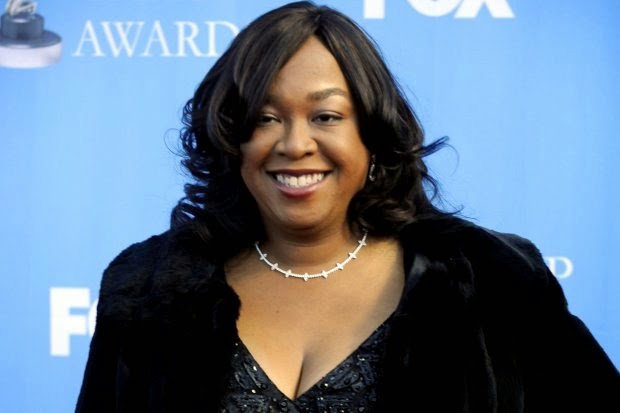
Shonda Rhimes is my hero, especially for representing Philly in "How To Get Away With Murder"


There were severable reasons that I wanted to see The Maze Runner. First, the concept of a killer mystery maze was damn cool, and as one of my primal fears is death by crushing, many of the action sequences in the trailer inherently gripped me. Seriously, death by crushing: worst death ever. 

Second, Kaya Scodelario was in it. Effy! I watched the entire first season of Skins just for you! And you only showed up in the beginning and at the end! And you barely spoke! 

Effy!

Cool action sequences. Pretty girl. All standard and understandable reasons to go see a movie, right?

But I also went to see The Maze Runner for a guy: the character of Minho, to be more specific. Having never read the books, I didn't know that he even existed. So when I first saw the trailer, I was shocked to see an Asian male character featured prominently in the cast. Upon further research, I found out that he was actually an important character who got to do really cool things. 

There doesn't seem to be any data out right now that verifies that one of the key reasons that this movie succeeded was that a lot of movie goers felt as I did, but if we look at the bigger picture of recent trends (e.g. Kevin Hart is just raking it in!) as well as academic studies that show that diversity is good business, it seems to be a no-brainer that having solid non-White characters in a good movie will only help its prospects. 

Rufio! Rufio! Roooo! Feeeeee! Ohhhhhhhh!
And yeah, The Maze Runner is an entertaining movie that effectively mashes up Lord of the Flies, Peter Pan, and Lost. The audience is just thrown into the confusing and nightmarish world of the maze, which helps us identify with the bewildered protagonist, Thomas (played by Dylan O'Brien). You keep watching the movie because you want to know who built this monstrosity and for what reason. 

Ki Hong Lee as Minho
Minho turns out to be an awesome character as well (as verified by the two female friends with whom I went to see the movie). The other characters are engaging and complex enough, including the leader Alby and his right-hand man, Newt (aka the little lovesick boy from Love Actually who still looks exactly the same except he's twice as tall now). Even the resident bully, Gally, makes a lot of sense if you really think about what he says.

The moral argument for diversity was always the easy argument to make. From an artistic angle, a creative work still has some obligation to be rooted in reality. That's why we rightly snort in derision at Mary Sue stories in which a thinly-veiled author avatar smites all his enemies with ease, always has the pithy one-liner comeback in every single situation, and has conventionally beautiful girls fall in love with him for no discernible reason. So if your story takes place in multicultural location like Los Angeles or New York City, or in a non-Western setting like Ancient China, it's probably best not to always shoehorn in a White male hero into the middle of the story. There's also the socio-political angle that recognizes that having one's story told is a right and that by denying some groups the opportunity to share their narratives, we are effectively treating them as second-class citizens.

Middle Easterners are such a diverse people. This is what Persians look like when they're heroes.


And this is what Persians look like when they're villains.
More often than not, however, the defenders of the status quo use the economic argument to stifle debate. The rather bizarre and offensive rationale is that Americans (mainly White Americans) just aren't willing to identify and empathize with any character outside of their own racial group. Even though native Beijingers could cry at the hardships of a turn-of-the-century Philadelphian debutante in Titanic and Ghanians could root for a British schoolwizard in the Harry Potter movies, Americans just don't want to see Black or Asian or Latino characters. This is an attitude that I've harshly criticized before.

Well, what if that argument no longer stands? What if it's not just morally beneficial to be inclusive in storytelling, but also economically as well? Will we finally see more changes? I definitely think so, and I think these changes are happening now. But I would also be interested in hearing what the new excuses against diversity will be and whether they will have any influence.

Some may ask: What does it matter? Some may even accuse people like me of being the racist ones for being so concerned about race. Shouldn't we all just be "color-blind" and appreciate a character for her character, and a story for its story?

That sounds all well and good, until you realize that we still live in a world where someone like Mae Jemison never believed that she could be an astronaut until she saw Uhuru in Star Trek. Or where a young Barack Obama, as someone who didn't exactly look like George Washington, never realized the potential for a prominent career in public service until he saw Sen. Daniel Inouye in the Watergate hearings.

Representation matters. And in a society where people are still superficially classified and pre-judged by their race and gender, it really matters.


Monday, March 24, 2014

7 Fairy Tales That Should Be Made Into Disney Movies


Having finally just watched Frozen, I've been inspired to think of more fairy tales that Disney can turn into movies. Sure, most of the classics have already been made, but there's plenty of material out there! However, alterations have always been a necessary part of Disney's adaptations because so many of these fairy tales are plain messed up in their original form. For example, there's version of The Sleeping Beauty where the prince has, ahem, "relations" with the comatose princess.

So how should these stories be changed? For starters, the encouraging trend in Disney and Pixar movies is to have female protagonists who are active and engaging, which is a great thing as I've mentioned here before. Moreover, for these heroines, romance is merely a sidequest as opposed to the end goal. Perhaps taking a cue from Studio Ghibli films, Disney movies are no longer about beautiful-but-boring heroines acting out a 1950s tween's dream life of finding the perfect boy.

As long as we spunkify the heroine by at least 30%, turn the tragic ending upside down, and commission a Tony-winning composer to write a few songs, these following adaptations are sure to be a hit!


1) The Six Swans


Synopsis:
Princess must weave 6 special shirts to save brothers who have been turned into swans by evil witch stepmother. Oh, and she can't talk or laugh while completing that task. Oh, and people start to think she's a witch and plot to burn her at the stake.

Problem:
Mute heroine brings up The Little Mermaid problem.

Modern Adaptation:
Give her a different disability, such as blindness. Make the heroine cocksure and bratty, a welcome change from the "adorkable" princesses we've seen as of late. Center the story around her relationship with her brothers. Kind of like Frozen, except instead of Elsa, you have 6 dudes. Maybe they were very protective of her when growing up, but now, it's up to her to save them.

Theme:
The powerful (and complex) relationship between sisters and brothers. And girls can save boys too (and not just because they want to marry them).


2) The Twelve Dancing Princesses


Synopsis:
Twelve beautiful princesses go to a magical lalaland every night to dance, causing them to go through dancing shoes like kleenexes. This is costing the king many monies, so he wants mystery solved. Old war vet, with the help of an invisibility cloak, figures out the truth, earns big reward, and marries eldest princess.

Problem:
Story kind of comes off as an indictment against young women and their frivolous, spendthrift ways.

Modern Adaptation:
Cut down the number of princesses from 12 to around 5, and make the eldest one the protagonist. Make the king a recluse (known as the Mad King) who has banned dancing in his kingdom because his beloved deceased wife was a great dancer. Princesses haven't seen their father since they were very young and they kind of hate him because of all the stories they hear. One day, they discover a portal to that magical dancing world, which is actually a world created by the faint happy memories of the king, which he has magically preserved to protect from being consumed by his own insanity. Slowly, the princesses discover more about their maligned father and are able to save him. And they have a fabulous time dancing while they're doing it.

Theme:
Finding out that your parents are more than what you thought they were.


3) The Red Shoes


Synopsis:
A stuck-up village girl named Karen decides to flout social convention by wearing flashy red shoes to church. Shoes start dancing on their own, forcing her to beg an executioner to chop her feet off. But those dastardly shoes, her bloody amputated feet in them and all, continue to haunt her until she truly repents for her haughty ways. Then she dies blissfully.

Problems:
Everything.

Modern Adaptation:
Unsalvageable. My mistake.


4) The Nightingale


Synopsis:
Emperor of China loves nightingale's song, but becomes enamoured with a mechanical version. He forgets about the real bird and lets it go. But when emperor is about to die, the bird returns to him and saves his life with its beautiful song.

Problem:
Lack of a dramatic arc. High potential for Orientalist racist nonsense.

Modern Adaptation:
A mechanical singing nightingale? That sounds like something that would happen in a steampunkish version of old China, so change it to that setting. Change from emperor to empress. And it's not only nightingales that are being mechanized, but also artisans and farmers and solders. Heroine has to guide her kingdom through this exciting but unsettling period. High potential for tech jokes. Make fun of Google bus?

Theme:
How to reconcile the advantages and dehumanizing effects of technology.


5) Vasillisa the Beautiful


Synopsis:
Russian story that's reminiscent of Cinderella. Vasillisa has a cool animated doll that can do a lot of hard labour. The famous Baba Yaga (the witch that lives in a hut with chicken legs) makes life hard for poor Vasillisa as well. But she is able to overcome her wicked stepmother, stepsisters, and Baba Yaga, and eventually makes her way to the city.

Problem:
Too similar to Cinderella.

Modern Adaptation:
Turn into heroine-led action movie. Russian fairy tales are really cool, but Disney will probably only take one shot at it. Therefore, this story will have to incorporate all the most famous elements of Russian folklore. So insert the Firebird (Cinderelly didn't have to fight no firebird) and Koschei the Immortal as well into an awesome thriller of a story that celebrates the uniqueness of Russian culture.

Theme:
Russian stories are really kickass.


6) The Matchstick Girl


Synopsis:
Beggar girl sells matches in the winter. Before freezing to death, she lights her last few matches, seeing wonderful sights before succumbing to the bitter cold.

Problem:
Holy moly, is this depressing.

Modern Adaptation:
Put some Dickensian meat on the bones of the story. Heroine can be an orphan who is being exploited by Big Fire. She survives her day to day life solely on her wits. Kind of like a female version of Aladdin. Fervently believes that she has a loving grandmother somewhere in the city and wants to find her. Disney has never done Dickens before (though it has done 19th century novelists before in Victor Hugo with The Hunchback of Notre Dame), so here's their chance!

Theme:
How to survive and remain a good person in a big, mean city that wants to exploit you for money.


7) Rumpelstiltskin


Synopsis:
New queen has to spin straw into gold for the king. Some gnome named Rumpelstiltskin helps her out but then demands her first born child. She is able to keep her child because she guesses his name.

Problem:
Father is kind of a real big jerk.

Modern Adaptation:
What if the queen somehow gained the ability to spin gold from straw from Rumpelstiltskin? The story could take place after the traditional happy ending of the fairy tale. The heroine is immensely popular and powerful because of her magical ability, but she is deeply unhappy because she knows that people only like her for her wealth. Plus, life's no fun when gold is literally always at your fingertips. So she decides to escape her unrewarding life to seek adventure outside. Kind of like Aladdin from Princess Jasmine's point of view.

Theme:
Mo money mo problems.


Thursday, February 13, 2014

A Prescription for Cinematic Amnesia (Movies I've Watched Recently), Pt. II

The Lover (L'Amant)


Some movies are borderline porn. Like, if you were having nice coffee chat with an alien and were trying to explain to it the difference between something like Pirates (aka that really high budget porn version of Pirates of the Carribean... not that I've ever seen it) and some very sexually explicit movies like The Lover (or Lust, Caution or Unfaithful or Last Tango in Paris), it may be really difficult to articulate the difference, even if you know that there is a difference.

I'm not saying this as something derogatory. In fact, Lust, Caution is one of my favourite films, and I enjoyed The Lover as well. The story here is very simple and the characters don't even have names. The Girl is a French teenager in colonial Vietnam whose family has lost everything financially, but they still cling to some level of social status due to their Frenchness. The Chinaman (seriously, that's his character's name in the credits) is a wealthy ethnic Chinese living in Vietnam. He's what you'd have called a "dandy" in the 19th century: a young man with no particular skills except in traveling and spending his family's money.

What's most interesting about this movie is the fact that while The Chinaman is significantly older and wealthier than The Girl, he is still beneath her in some way because she is French and he is Chinese. In colonial Vietnam, that makes a big difference and they both know it. In one telling scene, she asks him if he's ever been with a French girl before (since he was recently in Paris). He says only prostitutes, because that's all he's allowed to "have." So the movie is more complex than simply a story about an older rich guy taking advantage of a helpless teenage girl, but rather, how two people navigate a crumbling and shifting society using the advantages given to them.

Definitely don't watch this with your parents in the same room


2014 Oscar-Nominated Animated Shorts


It's not only sad to think of all the movies you'll never get to see, but it's even more of a downer to think of all the documentaries, shorts, and animated shorts that you'll never watch either. So I took the chance recently to go to a showing of the 2014 Oscar-Nominated Animated Shorts. The shorts are very diverse, ranging in tones from sarcastic, creepy, charming, and cute. There's one set in a steampunk robot city where a citizen adopts a dog (Mr. Hublot), one about a witch and a cat who make friends while flying across the land (Room On The Broom), and one where two umbrellas fall in love (The Blue Umbrella).

My favourite was Feral because it was spooky and heartbreaking. It's about a wild wolf-child and the artwork is unique in a nightmarish way, reminiscent of a Francis Bacon painting.

Mmm, Bacony


The Squid and the Whale

Growing up, I always wished my parents were the type to try to relate to me and talk to me as if we were pals. But then I watch movies like this and thank god that they weren't. Yikes, could you imagine having the Jeff Daniels character as your dad? He's the type who'd sneer at you if you talked to him about some girl who didn't reciprocate your feelings, then go on to talk about all the hot chicks he had, or could've had, when he was your age. All while throwing around quotes from Saul Bellow and William Faulkner.

The Squid and the Whale is a movie about a divorce and how two sons (the elder one played by Jesse Eisenberg) deal with it. The parents are super-educated members (or wannabe members) of the literati who live in Park Slope and discuss the merits of A Tale of Two Cities at the dinner table. This isn't exactly the most relatable demographic in the world, but most people will be able to identify with the divided loyalties that the two brothers face. I didn't like Noah Baumbach's Kicking and Screaming, but this movie was better. Even though it was very autobiographical, it felt less like an exercise in self-obsession ("Look at me and my over-privileged wannabe literary friends because we matter!") and more honest and painful because hey, we've all known what it's like to love, hate, and be disappointed by our parents.

The corduroy signifies his "down with it-ness"


Mitt

I've always thought that Mitt Romney was a good enough guy who was possibly one of those people who just wasn't meant to be a political leader. He may be a management whiz, loving father, and valuable member of his church community, but those things don't make you a good presidential candidate. Remember that it wasn't just Democrats who loathed him. It was his Republican rivals like Rick Perry, John McCain, and Rick Santorum who just despised him on a personal level. And it was London Mayor Boris Johnson who joined in on the anti-Mitt fun (after Romney's ill-advised comments on London's preparations for the Olympics) when he had no real dog in the race. There's just something about the guy.

Mitt rescues his image the best way possible, in my opinion. Romney is not inspiring because he doesn't have a greater vision other than the fact that he'd be great for America because he made a lot of money at Bain Capital. But that doesn't make him a bad person, and it's nice to see him surrounded by those who love him, as opposed to those who would love to see him fail (aka many fellow ambitious Republicans).

What most impressed me about Romney was how self-aware he is. Even back in 2006 or so, he's aware of his own weaknesses in terms of public perception, as he dubs himself the "Flippin' Mormon." Even after his knockout first debate performance that revitalized his post-47% presidential campaign, he calmly tells everyone that first debates are always won by the challengers and that President Obama will be way better next time.


Linsanity


I'm kind of a Jeremy Lin fanatic. Ever since he joined the Houston Rockets, I've watched almost all of their games, and as a result, I could tell you that in his first month or so as a Rocket, sportswriters were legitimately wondering if he and Harden could be the best backcourt in the league. But then he went into a funk, mainly due to the knee injury that sidelined him for the Knicks' playoff series against the Heat. He hit his stride after the all-star break, only to play very poorly (like the rest of the team) in Game 1 against the Oklahoma City Thunder in the first round of the playoffs. Then he got injured in Game 2, allowing Beverley to come in and play well. Then this season, Beverley was named the starter because he is tenacious defender and a good 3pt shooter, and Lin's skills were seen to be somewhat redundant when pared with James Harden's. Lin adjusted to the 6th Man role pretty well and even had some monster games that exceeded anything he did in his Linsanity run. He had a very bad January, however, the lowest of which came against a pair of losses against the Memphis Grizzlies. But then Harden got injured and Lin was thrust back into a primary role, and he found his groove again. Recently, he got his first triple double and is now back to balling as a 6th Man.

But Linsanity is about the beginning. For someone like me who's watched all the highlights and interviews on Youtube many times, there's nothing too enlightening about this documentary, but I do appreciate the greater social commentary provided by his high school and college coaches. It's also quite harrowing to listen to Lin and his family's account of the days leading up to that first breakout game against the New Jersey Nets, and how that was almost certainly his last chance to make an impression before he got cut permanently from the NBA.

It was outplay Deron Williams or go home, permanently

Over at Deadspin, they have this great series on the history of Black QBs in the NFL. I've always thought that Jeremy Lin was a natural successor to someone like Warren Moon or Doug Williams (former was the first Black QB to be inducted into the Hall of Fame, and the latter was the first Black QB to win the Superbowl). Nowadays, it's pretty common to see Black QBs. Russell Wilson just won the Superbowl and it's as though people forgot that he wasn't some White dude who grew up in Idaho. Many of the next gen young QBs are also Black: Cam Newton, RG3, Colin Kaepernick, and the aforementioned Russell Wilson. In fact, if you're a racist fan, you're pretty much having to pin all your hopes on Andrew Luck once the Manning-Brady-Brees-Rodgers group fades away.

In those Deadspin articles, they talk about older Black men who pinned so much of their hopes on the likes of Warren Moon and Doug Williams because they help inspire others, especially those of their own race, to confidently discard stereotypes that were so ingrained in our society that many people, even Black people, sort of believed in them. Because in the end, it's not about being quarterback or point guard; it's about being told that you're inherently incapable of doing something because of your race, and then making a fool out of anyone who told you that.

Anyway, very enjoyable and uplifting, especially if you haven't rewatched the highlights to death as I have. The interesting thing is that you could easily make another documentary about that weird offseason when the Knicks let him go, and that topsy-turvy first season in Houston when everybody expected him to fall flat on his face.

Thursday, January 16, 2014

A Prescription for Cinematic Amnesia

Ever have this experience when you can't remember any movies you've watched in the past few months? Like, someone will ask you if you've seen any good movies recently and you draw a complete blank? Even though you know that you've seen and enjoyed quite a few in that time period?

I hate it when that happens, so perhaps for the sake of my own sanity, I'll periodically just jot down the movies I've watched, here on this blog. The following are the ones that I watched over winter break.


A Man and A Woman (Un Homme et Une Femme)


A movie for the senses. Beautifully shot, especially the blue tones. And the voiceovers sound as though someone is whispering into your ear. A really barebones story, but if you're more into character and atmosphere than plot, this is a good movie, especially since it clocks in at a pretty breezy 102 min. It also has that really famous theme song that you've probably heard but never knew where it came from. I don't really understand why there were those long race car driving sequences though. I know that the guy is professional driver, but some of those sequences seemed gratuitous.

From cool blue wash...

To a nostalgic sepia tone


Strangers on a Train


I've never been a big fan of Alfred Hitchcock. Out of all his movies, I think I like The Birds the best because there's not as much hamfisted pop psychology and is just a creepy movie about birds going berserk for some reason. Strangers on a Train was okay, but I thought that the actor who played the good guy was a bad actor. And the villain was perhaps just one prance away from being campy.

Still not a Hitchcock booster.


Brief Encounter


Oh good, after watching this movie, I won't have to think of The Seven Year Itch when I hear Rachmaninoff. As you can probably tell, I didn't like that movie much. Something about having to watch an old guy lust after Marilyn Monroe and feeling manipulated to sympathize with him just wasn't that entertaining.

Anyway though, I liked Brief Encounter though. I loved how painfully ordinary it was. The protagonist is a plain housewife whose highlight of the week is taking the train on Thursdays to go watch movies by herself. The man she meets is a doctor. Neither of them are that wealthy, glamorous, or beautiful. In fact, they're almost your stereotypical dowdy British people. Which is what makes their short-lived romance more affecting. Richard Linklater must've seen this movie before making Before Sunrise. That just goes to show you that no matter if you're repressed post-war British citizens or Gen X drifters, you can always find love on a train.


Kiki's Delivery Service


This movie is similar to Whisper of the Heart and Spirited Away in that it's about a young girl who has to overcome her own fears and insecurities. But what made Whisper of the Heart special to me was how beautifully mundane it was. The story is little more than about a young girl who gets a crush on a fellow student and also tries to write her first story. Yet somehow, the movie makes us invest our feelings and empathy into Shizuku, the heroine. And Spirited Away is its exact opposite in terms of realism, unless you live in a world where talking radishes and giant babies are everyday sights and evil big-headed witches constantly try to enslave you in their bathhouses.

Kiki's Delivery Service sits in between as a fantasy rooted in realism, which didn't work as well for me. Perhaps if those two other movies hadn't existed, I would've liked Kiki's Delivery Service more. And as per Studio Ghibli, the animals are adorable and full of personality.

Aww...


Blue Marriage


Lee Yeon Hee! Okay, I'll admit that I was really excited about this movie because Lee Yeon Hee was in it and she's #3 on my Korean girl list. Happily, it was watchable and pleasant enough. The story revolves around 4 couples who are all about to get married but face their own issues. One couple has to deal with each others' pasts. Another has issues with routine and boredom. Another has problems because they're actually in a shotgun wedding. And the last one has to come to terms with insecurity.

I found two of the stories to be more compelling than the others. First, Gun Ho and Vika were interesting because it dealt with the issue of foreign brides in Korea (Vika is from Uzbekistan). It also dealt with the story realistically, making Gun Ho deeply worried that he is just being used for citizenship purposes. It didn't just Hollywoodize the story where the middle-aged schlubby guy gets the hot girl just because.

And So Mi's story was good too, and not just because it involves Lee Yeon Hee walking around Jeju Island in a blue dress. Her story deals with the troublesome issue of complacency and stagnation, and how even if a couple is as picturesque as her and her fiance (played by 2PM's Taecyeon), there still needs to be some spark and passion in the relationship.


Monday, December 2, 2013

5 Christmasy Movies That Are Way Better Than "Love Actually"


As you can probably tell, I'm not a big fan of Love Actually. Call me a grump, but you know the saying that underneath every cynic, there's a disappointed romantic? I think I dislike the movie because I wanted to like it so much when I first saw it, and I did enjoy it a lot the first couple of times that I saw it. Then I kept seeing it every Christmas and realized how full of shit it is.

Just a quick checklist of the things that bother me:

- The unbearable and cloying Pax Britannica patriotism in the Prime Minister's speech. Portraying England as some underdog on the world stage, even though we're barely decades removed from its imperial era and still to this day, things like British accents are automatically associated with wealth, class, and sophistication? And god, THAT MUSIC. Ugh. And fucking up geopolitics for sex is not romantic, just childish and selfish. It didn't fly for me in The English Patient, and it doesn't fly here.

- Poor Emma Thompson really gets screwed, huh? Where's her happy ending? Everyone seems to get at least something except for the middle-aged housewife.

- Never understood why Laura Linney's mentally challenged brother had to prevent her from hooking up with her hot co-worker. A contrived obstacle.

- Liam Neeson and his son sure got over their very recently deceased wife and mother quickly, huh? How heartwarming.

- That "best friend" sure was kind of a dick, huh? I mean, I understand the inner turmoil that must come with being in love with your best friend's wife. But did he really have to do that stupid title card thing? To me, it seemed like he was mainly trying to make himself feel good by doing this supposedly awesomely swoon-worthy thing and, therefore, become the great romantic lead in the movie of his own life. What if she liked that a little too much? What then? He could've just written her a short confessional letter and left it at that.

- London is one of the most diverse cities in the world, yet the London in Love Actually is still stuck in Churchill's time or something. Even in a freaking ensemble piece with no central character, not a single major character is a person of colour, unless you count the Portuguese, and that's really a stretch. Besides, they're just portrayed as boorish peasants.

But I'm here to be positive, not negative. Here's a list of movies, in no particular order, that I think do a better job of evoking the Christmas spirit than Love Actually. Only one of these movies is actually heavily centered around Christmas, but all of them have significant elements of Christmas in them.


Tokyo Godfathers


Tokyo Godfathers revolves around children, but I probably wouldn't call this a movie FOR children because it's about 3 homeless people in Tokyo during Christmas who find a baby in a dumpster. Led by the extremely maternal Hana (oh, who happens to be a a tall, ugly dude who's convinced he's actually a woman), the grizzled drunkard Gin and the troubled teenager Miyuki try to find the baby's parents and return the child to them.

The movie is very funny in both a dark and warm way because the main characters live such wretched lives. But they're also good people with complicated pasts, and as you get to know their stories more, you stop seeing them as these grimy hobos and more of a dysfunctional family that you want to see succeed in the end. You also get to experience the urban jungle of Tokyo, which not a lot of movies allow you to do.

Christmas Emotion Evoked: The spirit of friendship and family


Harry Potter and the Goblet of Fire


Most of this movie is not set during Christmas, but its big centerpiece, the Yule Ball, is. That's why it's on this list. I've always enjoyed the Harry Potter books more for the "normal" elements than the magical ones. The story of Harry finding a surrogate family in the Weasleys and in the Hogwarts community was much more interesting to me than all the dragon battles and wand fights (which, to be honest, look kind of stupid on-screen, don't they?) put together.

That's why The Prisoner of Azkaban is my favourite book in the series, because it's the first book where Harry's family story takes center stage instead of a cartoony villain and his super evil quest to rule the world. And that's why The Goblet of Fire is my favourite movie, because it deals with the awkwardness of puberty so well, especially during the Yule Ball part. Christmas at Hogwarts has gotta be pretty cool, and Goblet of Fire portrays that the best out of all the movies.

Christmas Emotion Evoked: The awkwardness of having a crush, worsened by the fact that all the snow and twinkling lights puts more pressure on you to do something bold and romantic


Catch Me If You Can


Home Alone is one of my favourite Christmas movies (I just didn't include it here because I thought it was too obvious), and I think that explains why I like Catch Me If You Can so much during the holidays. Because it's really a kind of grown-up version of Home Alone, isn't it? Neglected kid gets carte blanche (quite literally, in this case) to do whatever he wants, but he just ends up lonely around Christmastime and wants a family more than anything. Except in this movie, Frank's family doesn't get chaffeured to this house on Christmas morning by John Candy.

This is actually a pretty bipolar movie, now that I think about it. On one hand, you have the giddiness of watching Frank hoodwink all those people into thinking he's a pilot/doctor/lawyer/whatever. Then you have the parts where he's all alone on Christmas with no friends or family, with only his nemesis in the FBI to call. It strikes a good balance, and despite it being considered one of Spielberg's lighter films, I still think it's among his best work.

Christmas Emotion Evoked: The desire to spend Christmas with family while opening presents by a big fireplace... and the melancholy that comes when you don't have that


The Apartment


C.C. Baxter is the schmuckiest schmuck who ever schmucked. He's like Willy Loman meets Kirk Van Houten. He's an office drone at a soulless insurance company, and he's the type who'd eat TV dinners on Christmas Eve. Well, that's if he's lucky and actually gets to spend Christmas Eve in his own apartment, as opposed to wandering around outside as he waits for his bosses to finish using his place as a discreet motel for their flings with their mistresses.

It'd be a stretch to call this a Christmas movie, though Ms. Kubelik does attempt suicide on Christmas Eve and that's when the movie really gets going. But The Apartment does capture that sense of neverending loneliness that tends to fester for many at this time of year. For a really dark movie that presents a rather bleak world full of lies, corporate conformity, spinelessness, self-harm, and the rigid social hierarchy in which the top dogs get to do whatever they want, the mood is nevertheless endearingly optimistic. Maybe it's just Jack Lemmon's ceaselessly earnest demeanor or Shirley MacLaine's proto-manic pixie dream girlness, but somehow in the end, you feel that the tread-upon schmuck and the suicidal girl are the luckiest people in the whole city.

Christmas Emotion Evoked: Feeling like a lonely nobody, but with the hope that maybe there's somebody out there for even you


You've Got Mail


And just in case you thought I was a heartless bastard who couldn't stand romantic comedies, here's one! A lot of the appeal behind Christmas is the nostalgia as the best Christmases tend to be the ones we had when we were very young, and we spend the rest of our lives trying to chase those experiences again. You've Got Mail gives you a nostalgia fix that's so pure that Heisenberg would be proud. It has aged wonderfully precisely because it's so dated now. It's a contradictory statement, but the movie is now such a perfect artifact of the 1990s: AOL, Tom + Meg, the very idea that a books superstore is some kind of unstoppable business juggernaught... Listening to that dial-up song as Tom Hanks and Meg Ryan connect to the internet can't help but bring back warm memories of being a kid and discovering the internet for the first time. And not to mention the very quaint idea of interacting with an online friend with long confessional missives through email, as opposed to a "wut up?" on Tinder.

This movie also portrays one of the most pleasant versions of New York City ever, where everybody lives in cozy apartments and works in cozy bookstores and has cozy friends. There's absolutely no stampedes of pedestrians, even during the holiday rush. And actually, though this isn't an obvious Christmas movie, almost half the movie takes place during the Christmas season.

Christmas Emotion Evoked: Nostalgia, lots and lots of nostalgia


Wednesday, November 27, 2013

Young James Shigeta: Holy moly, how is something in black and white LESS racist than what we see today?


I thought that this post would be relevant right now because of the Katy Perry AMA incident. I don't think she is a racist for wearing a cheongsimono (or whatever her outfit was supposed to be) in her performance. But I do think our society's racist for thinking that the only time it's acceptable for non-Western culture to take center stage is when White people are wearing it as a costume. It's like when you show up to a dinner party, but only your bottle of wine is welcomed. Oh thank you for your culture! Please leave it on the doorstep and go away because we can't stand your ethnic faces.

But astoundingly, the problem seems to have gotten WORSE over time. The video below shows various clips of a young James Shigeta in his days of wine and roses, and it's confusing as hell. He's an Asian actor. In a Hollywood production. And he's acting all normal and suave and shit. This isn't supposed to happen!


I mostly recognize James Shigeta in his various Old Asian Man roles in the past few decades. Most notably, I remember him getting shot in the face by Alan Rickman in Die Hard. You know, it's always eye-opening to see what old Hollywood actors looked like back in the day. A young Paul Newman or a young Warren Beatty pretty much makes every leading man today look like a troll.

Same goes for actresses. Here's a young Joan Fontaine in Rebecca.

Who said you needed Technicolor to be hot?

But it's infinitely more weird watching someone like James Shigeta be all handsome and mack daddyish in his heyday because he's Asian. Can anyone here name a single mainstream movie in recent memory in which an Asian man was a traditional leading man? Some may come up with Harold and Kumar Go To White Castle because Harold ends up with Maria in the end, but that's only because he overcomes his inherent Haroldness to finally talk to the cute girl he's been eyeing since forever. He is the anti-leading man.

Seriously, I'm still waiting. TV has been somewhat better with characters like Jin (Daniel Dae Kim) from Lost and Glenn (Steven Yeun) from The Walking Dead, but they're far from the main characters of their shows.

Sessue Hayakawa, whom I mostly remember as the antagonistic Japanese officer in The Bridge On The River Kwai who is forced into submission by Alec Guinness' heroic Britishness, was also quite the leading man in the early days of film (we're talking World War I era). Believe it or not, some film historians regard him as the first male sex symbol in Hollywood. The tragic reality is that many of his early silent films are lost, so it's almost as if his leading man career has been erased.

This cat's got style

It just makes me wonder how it was possible that in the early 20th century, when the U.S. was just a couple of decades removed from the Chinese Exclusion Acts, the American film industry still somehow cultivated an Asian male sex symbol. Yet today, many people will argue that America is simply not ready for Asian characters who don't fit comforting stereotypes such as man-pleasing geisha girls or emasculated comic relief buffoons.

It's not as if things were all that enlightened back then. There were still the Hop Sings and Mr. Yunioshis and all those other stereotypical characters. But it's all about balance. I wouldn't mind at all the Ken Jeong and Matthew Moy and Gedde Watanabe characters if there were at least some healthy counter-balance.

So please, let's never hear of the "American audiences aren't ready for an Asian..." argument bullshit ever again because apparently, back when interracial marriage was illegal and immigration from non-European countries was strictly controlled and it was perfectly cool to say gook or chink, people were still willing to make and see movies that didn't feature Asians in stereotypical roles. Don't tell me that we've regressed from that.


Sunday, June 30, 2013

Is "Before Sunrise" or "Before Sunset" the better movie? Pt. I


I just recently found out that Before Midnight is playing in Seoul, so I decided to watch both Before Sunrise and Before Sunset back to back before going to see the third part. The first two movies are both great films, and quite different in tone, visual style, and maturity. But I still can't help directly comparing them.

The Case for Before Sunrise


The Telephone Game: I loved this scene so much when I first saw it
I must've seen this one when I was around 20 or 21 years old, and like every lonely (and self-involved) guy who was growing more and more averse to the routines of the college social scene, I just KNEW that this movie had been personally made for me. As in, Richard Linklater had been aware in the early 1990s of my 6-year old self and could predict that about 14 years later, I would really need to watch a movie like this. And for mainly that reason, he made Before Sunrise.

Okay, maybe I wasn't that narcissistic, but nevertheless, Before Sunrise was one of those movies that just sucked me in, especially since I barely knew of it beforehand. In fact, I don't even know why I decided to watch it in the first place. All I knew of it was that it starred a young Ethan Hawke, who after having apparently gotten over Neil's death and Mr. Keating's sacking, had decided to become goateed pseudo-jaded Eurailing slacker.

The horrors of "Hellton" turned Ethan Hawke into a
Gen X slacker
Upon first viewing, so much of the movie rang true to me. Jesse was my hero for being able to fight through his own uphill climb of awkwardness to start a conversation with Celine across the train aisle. I often was engaged in that fight myself, but I usually lost and never said much to the girls who sat near me in class or stood close to me at parties. Maybe I could be like Jesse one day, because all it took was for that first word to make its escape from our inhibitions and fly past our lips, and voila, conversation!

But Jesse wasn't some comic book superhero. For instance, when he is first talking to Celine in the lounge car, his hands can't help but touch EVERYTHING, from the table cloth to his neck to the salt shaker to the lamp... There are times when he can barely look at her, choosing instead to look out the window as he throws out every thought he has, hoping that something impresses her as interesting. Neither of them seem to actually be listening to each other at first, each just thankful for the attention being shown to them by the other. You ever have one of those conversations with someone to whom you're so glad to be talking that you pay absolutely no attention to what they say while you grin stupidly the whole time? Yeah, that was Jesse and Celine.

There was so much that could've gone wrong with this film. A story about 2 attractive and probably somewhat affluent young white people being all young and full of musings in Europe could've easily ended up as obnoxious as any one of Woody Allen's recent films in his Yurp tour (of which Midnight in Paris is the worst). The movie could've ended up as a movie adaptation of Thought Catalog. Its "One night in a city" tale could've ended up cloying as precious shit like Nick and Norah's Infinite Playlist.

But it didn't, miraculously. The roughly sketched characters had enough little details and idiosyncrasies to not be complete audience stand-ins, yet they had no last names and no extensive personal biographies. They could've been any one of us. And the movie didn't glamorize Vienna, and through the camera's rather grainy and washed-out look, the city on an overcast summer day looked almost drab and mundane. This was no Hollywood travelogue that gloated its inaccessibility to us commoners whose own trips to Vienna wouldn't be aided by a prism-eyed cinematographer and an impeccable costume designer.

Does this fill you with optimism and pessimism? It probably depends
entirely on where you are in your own life.
Then a funny thing happens when one gives Before Sunrise a second (or third or fourth...) go, perhaps when one's a little older than the first time. The dialogue, while still spontaneous and naturalistic and uncontrived, makes you cringe a little bit for some reason. Jesse doesn't seem as cool anymore, and in fact, comes off a little bit like an immature douchebag a few times. You still admire the characters' romantic idealism, but you start to have more doubts about them.

The movie hasn't changed, but you have. And you know it when you watch the film.

Far more than Avatar or The Lord of the Rings, Before Sunrise is the greatest fantasy film in modern times. Its premise is so simple yet so unobtainable for most of us. All we can do is watch it again and again and hope that one day, we too will have our own Before Sunrise moment, to the point where it becomes an embarrassing cliche that we would never admit to anybody. But like those who secretly continue to believe in UFOs or hidden magical realms behind closets, we still cling to the fantastical idea.

Before Sunset may be more emotionally fraught, or more realistic, or just prettier to look at. But Before Sunrise is the better film because it'll strike you that first time like no other. No matter how your perception of the characters changes over time, the impact of seeing them in their youthfully unburdened lightness will remain the strongest.

In Pt. II, I will make the case for Before Sunset.

Sunday, July 22, 2012

Some observations on "The Dark Knight Rises" (Spoilers!)

The end of a saga
I just watched The Dark Knight Rises with my friends. I liked the movie, though I'm not one of those diehard fans of Nolan's Batman trilogy. I still hold Batman Begins in the highest regard, as I thought The Dark Knight was too ham-fisted and bombastic. I'm still not sure where I'd rank The Dark Knight Rises in the trilogy, but here are just some thoughts that came to me as I watched the movie.

1) Christopher Nolan has a reputation for "fridging" his female characters, aka killing women off to motivate the men. Some accuse him of thinly-veiled misogyny, but after seeing The Dark Knight Rises, I think there's a less sinister answer: the guy just can't write female characters.

Every line that Selena Kyle had was of the flirty, pseudo-double-entendre type, even when Bane's thugs were about to assault her and Batman, or when the nuke was about to go off. It's as if Nolan and Co. don't realize that even a pretty lady like Selena Kyle would just speak normal English, as opposed to some mystically tantalizing Womanese.

2) Wasn't that one of the most awkwardly cut sex scenes we've seen in a long time? Bruce Wayne and Miranda Tate go from lightly kissing in the dark and joking about the power outage, to suddenly lying naked on the floor underneath a rug. It took me a few seconds to register that they had slept together at all. And just when I realized that, Bruce abruptly left her to go stand on top of the Empire State Building (?) in his Batman costume.

Did he ask her to leave Wayne Manor first, or...?

3) After escaping from the Black Hole of Calcutta or whatever that subterranean prison was, Bruce Wayne easily makes his way back to Gotham City. Did he have his credit card with him while in prison? Was there even an international airport in that mysterious and exotic country that he was in? Did he cross the one intact bridge to get into Gotham, and if so, how come nobody noticed or stopped him?

4) I'm fairly certain that you can't fix a herniated disk by punching someone in the spine and hanging them up for a night.

5) Is Bane a pedophile? Did he first fall in love with the little girl version of Miranda Tate?

6) How did Selena Kyle know how to drive the Batpod so well? And where did she get her high-tech gadgets? And where did she learn to fight almost as well as Batman? Was she in the League of Shadows too? Man, that place seems to be about as exclusive as Costco.

7) On the topic of Selena Kyle and superheroines in general, enough with the high heels. Fantasize in your own private, "tastefully sensual" sketches or something.

8) Does anyone seriously believe that Tom from 500 Days of Summer can deal out the daily brutal beatings required of a Batman?

9) Wouldn't the American, and probably the world, economy have been shattered by the absolute takeover of Gotham City (aka New York City) by a bunch of anarchist terrorists? Did life go on as normal in the United States while its most important and iconic city was completely taken over by a foreign entity?

10) All those football players died on the field. Well, except for the kickoff return guy. That was sad.


UA-49948643-1